
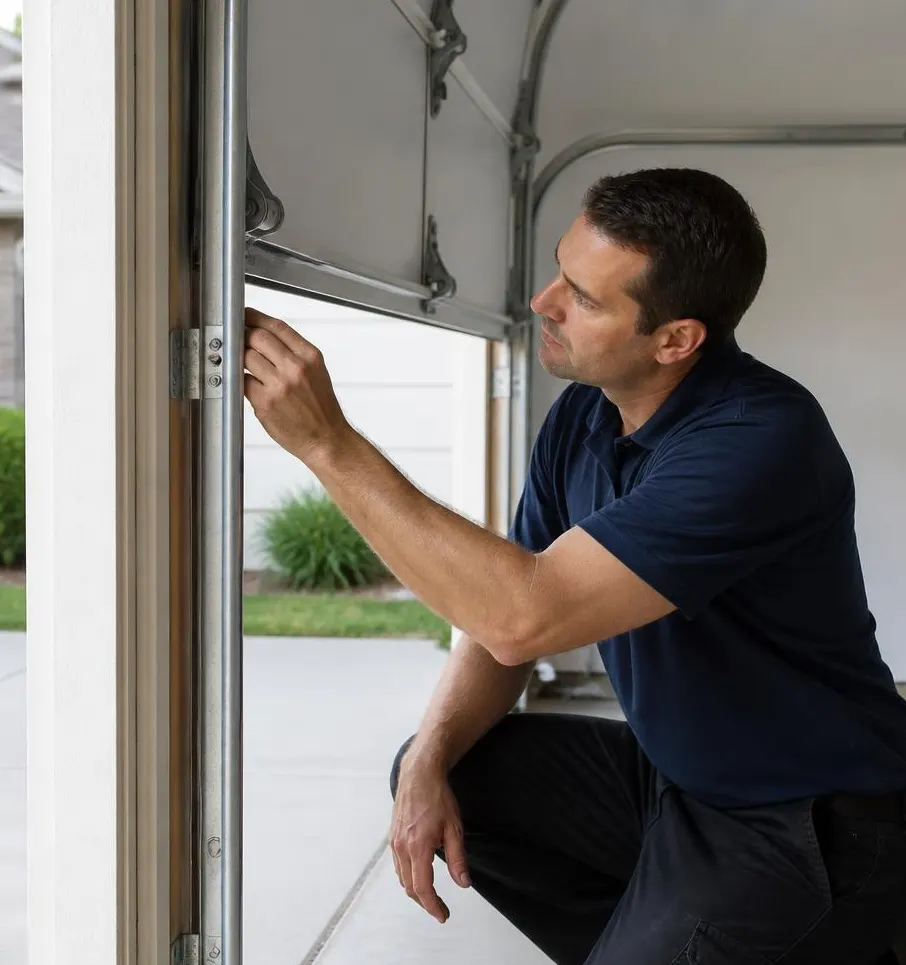
Rule of thumb: if your garage door feels stuck or sluggish on a cold morning, it's almost never actual ice — it's a weather seal clinging to damp concrete, thickened lubricant, or fogged sensors. The exceptions are the low-lying spots around Thousand Palms and Desert Hot Springs, where a hard freeze after a winter storm can leave a thin crust of frost on the slab, and homes where a torsion spring was already fatigued before the cold snap made it worse.
What You'll Notice
The symptoms usually show up before you've figured out the cause, so start here:
- The door won't budge when you hit the remote, and the opener motor hums or strains without movement.
- The door opens partway, stalls, then reverses on its own.
- Rollers grind or squeal instead of rolling smoothly through the tracks.
- The bottom rubber seal looks stuck flat against the concrete, almost glued down.
- The door closes but doesn't sit flush, leaving a gap along the bottom edge.
- Everything is slower than normal — not stuck, just sluggish, like the door is working against something.
Working Through the Causes
A technician checks these in roughly this order, starting with the cheapest and most common fix first.
1. The Bottom Weather Seal Is Stuck to the Slab
After a winter rain, the vinyl seal along the bottom of the door can pick up moisture and, once the temperature drops overnight, stiffen enough to grip the concrete like a suction cup. This is the single most common cause of a door that seems frozen shut in this climate. The fix is simple: gently pry the seal free with a flat tool rather than forcing the opener to break it loose, which can bend the bottom bracket. While you're down there, flex the seal — if it's cracked, brittle, or no longer springs back into shape, it's due for replacement, since a worn seal will keep sticking every time it's damp.
2. Lubricant Has Thickened or Gummed Up With Dust
Coachella Valley dust is relentless, and over the dry months it works its way into every roller, hinge, and spring coil. Combine that gritty buildup with cooler overnight temperatures and old grease turns into a paste that resists movement instead of easing it. This is why a door can feel noticeably heavier or noisier once the weather turns, even without any rain involved. The fix: wipe down tracks, rollers, and hinges with a dry cloth to remove old grease and grit, then apply a lithium- or silicone-based garage door lubricant made for this purpose. Avoid all-purpose household oils, which attract more dust than they repel.
3. Torsion Springs Are Reacting to Temperature and Age
Metal contracts slightly in the cold, and a torsion spring that was already near the end of its service life can bind or lose tension faster once temperatures drop at night. You'll notice this as a door that feels unusually heavy when lifted by hand, or an opener that strains on the first few inches of travel each morning. A technician checks spring tension and runs a balance test — disconnecting the opener and seeing if the door holds position halfway up. If it drifts, the spring is worn and needs replacing, not just lubricating, since a weak spring under added cold-weather resistance is also a safety risk.
4. Tracks Are Misaligned or Packed With Grit
Dust mixed with morning condensation can form a fine paste inside the track channel, which narrows the space the rollers need to move freely. This often shows up as grinding specifically on one side of the door rather than overall sluggishness. The check here is a flashlight and a level: look for debris buildup first, clean it out, then confirm the tracks are still plumb. Homes that have had earthquake retrofitting on the garage frame are slightly more prone to subtle track shifts over time, so if cleaning doesn't solve it, alignment is the next thing to inspect.
5. Photo-Eye Sensors Are Fogged or Misaligned
If the door reverses before it closes, or won't close at all, the safety sensors near the bottom of the tracks are the next stop. Morning humidity after rain can leave a thin film of condensation on the sensor lenses, which reads as an obstruction even when the path is clear. Wiping both lenses with a dry cloth and checking that both indicator lights are solid (not blinking) usually resolves it. If the lights stay off or flicker, the sensors may be knocked out of alignment and need to be re-aimed.
6. Chain or Belt Tension Has Shifted
Chain-drive openers can lose a small amount of tension as metal contracts in cooler weather, producing a slow, jerky start to the door's movement. This is usually the last thing checked because it's less common than the issues above, but it's worth a look if everything else checks out clean. The fix is a tension adjustment at the opener's rail, something most homeowners can do themselves with the manual, though it's easy to over-tighten and strain the motor if you're not used to it.
When to Call Cathedral City Overhead Garage Door
If you've cleared the obvious stuff — freed a stuck seal, wiped down the tracks, cleaned the sensors — and the door is still heavy, slow, or making noise, it's time to stop guessing. A heavy door that won't hold its balance point is almost always a spring issue, and torsion springs operate under enough tension to cause serious injury if handled without the right tools. Our Garage Door Maintenance visits cover exactly this kind of seasonal tune-up: cleaning and relubricating tracks and rollers, checking spring balance, and resetting sensor alignment before small issues turn into a door that won't open at all. If the spring itself has lost tension, our Spring Replacement service gets it swapped out and rebalanced the same visit.
If your garage door in Cathedral City, CA is sticking, grinding, or just not moving the way it used to this time of year, give Cathedral City Overhead Garage Door a call. We'll find the actual cause and fix it right the first time.